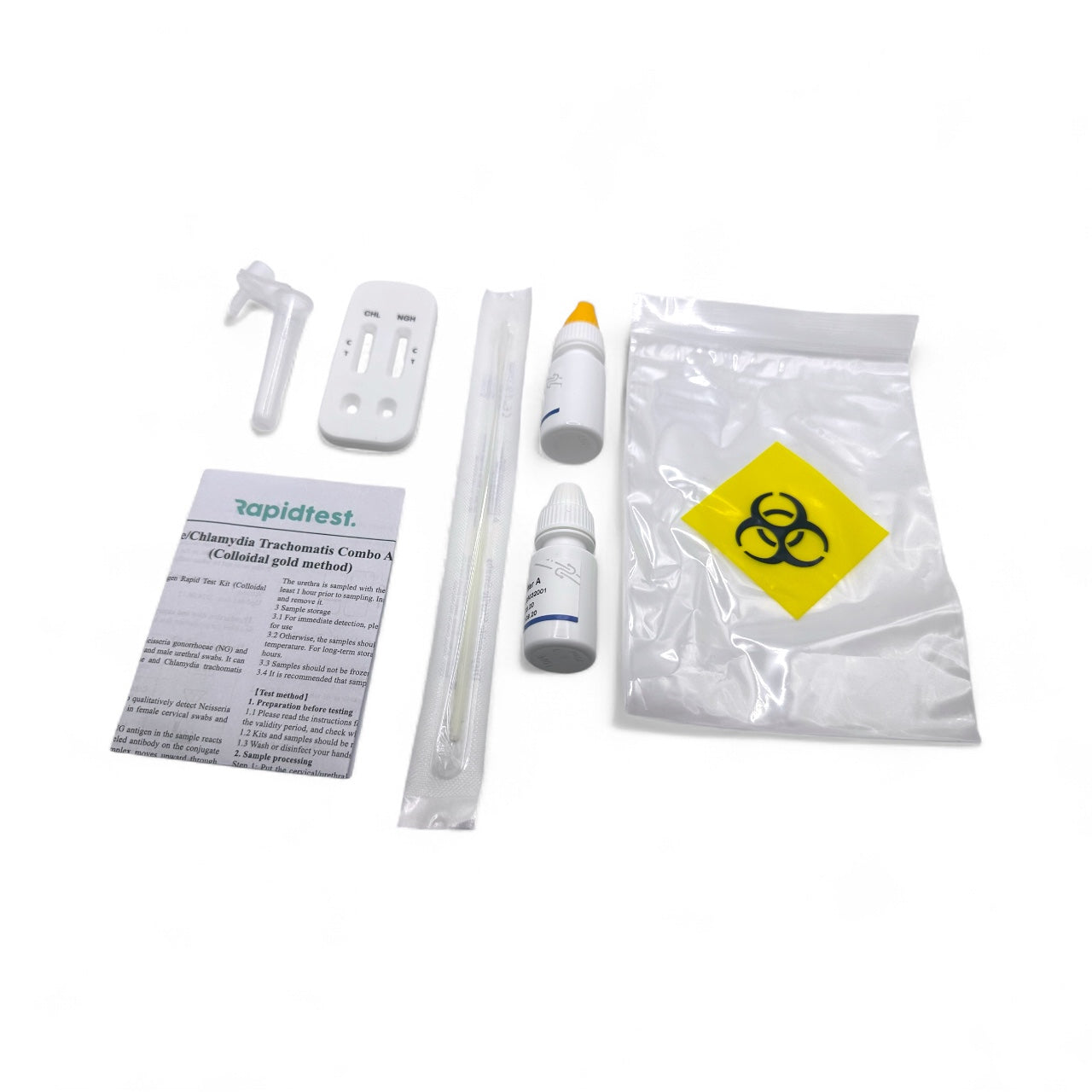
WHAT IS GONORRHEA?
Gonorrhea is a common sexually transmitted disease (STD) caused by the bacterium Neisseria gonorrhoeae.
It spreads through unprotected vaginal, anal, or oral sex and often causes no obvious symptoms, especially in women.
When left untreated, gonorrhea can lead to serious complications such as infertility, pelvic inflammatory disease (PID), or testicular pain.
Timely testing and appropriate treatment are important. An at-home Gonorrhea Test lets you screen privately and discreetly.

How the Gonorrhea Test Works
The Gonorrhea Test detects gonococcal antigens in a swab sample.
It uses lateral-flow technology and provides a screening result in approximately 15 minutes.
Step-by-Step:
1️⃣ Collect a sample:
- Men: Insert the sterile swab 2–3 cm into the urethra.
- Women: Use the vaginal swab as directed.
2️⃣ Prepare the solution: Place the swab in the buffer tube and mix.
3️⃣ Add sample: Drop a few drops of the mixture onto the test cassette.
4️⃣ Wait 15 minutes: Read your result.
Results:
- One line at “C” = Non-reactive
- Two lines (C + T) = Reactive; contact a healthcare provider or STD clinic for follow-up testing
- No control line = Invalid; repeat with a new kit
This is a screening result and is not a medical diagnosis. Always follow the instructions supplied with your kit.
Key Takeaways
Order a Gonorrhea Test Now-

Understanding Gonorrhea Test Performance
Understanding Test PerformancePerformance depends on correct sample collection, timing, and use.
- Specimen type: Vaginal or urethral swab
- Time to results: 15 minutes
Review the product labeling and instructions before use. This test is intended for screening and does not replace professional medical advice or diagnostic testing.
-

When Should You Take the Test?
Gonorrhea often causes no symptoms. Consider testing if a partner has an STD, after a new or higher-risk sexual exposure, or if a healthcare provider recommends screening based on your age, anatomy, sexual practices, pregnancy status, or other risk factors.
If you have symptoms or are concerned about a recent exposure, contact a healthcare provider or STD clinic for advice on the appropriate test, sample site, and timing.
-

What To Do After a Reactive Result
Comprehensive STD Panel – Test for Multiple InfectionsA reactive at-home screening result does not by itself confirm a diagnosis. Contact a healthcare provider or STD clinic for appropriate diagnostic testing and treatment advice.
Avoid sexual contact until you have received professional guidance, and ask the provider about partner notification and repeat testing.