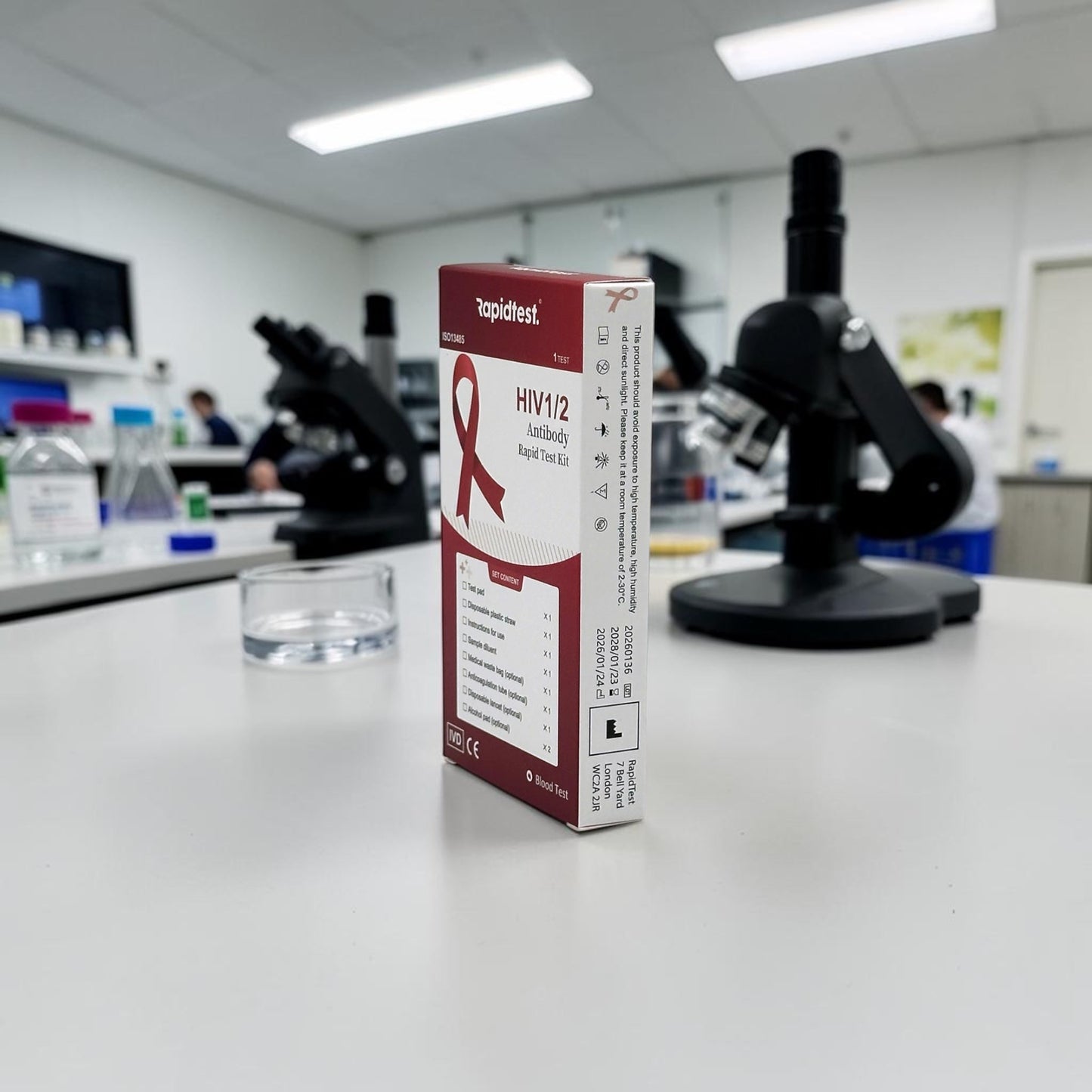
WHAT IS HIV?
HIV (Human Immunodeficiency Virus) is a virus that attacks the body’s immune system. It often causes no symptoms in the early stages, meaning many people don’t realize they’re infected.
Left untreated, HIV can weaken the immune system and progress to AIDS (Acquired Immunodeficiency Syndrome). Timely testing and appropriate follow-up are important. An at-home HIV Test allows you to screen privately and read the result within the time stated in the instructions.
👉 For other fast STD testing options, explore our Chlamydia Test or Syphilis Test.
HOW THE TEST WORKS
The HIV Test Kit uses lateral-flow immunoassay technology to identify HIV-specific markers in the sample type stated in the product instructions.
Steps to use:
- Collect the required sample exactly as directed.
- Add it to the test cassette with the supplied buffer, if required.
- Wait for the time stated in the instructions.
- Read the result only within the specified result window.
A reactive result requires follow-up testing by a healthcare provider or STD clinic. A non-reactive result may not exclude a recent exposure because HIV has a window period.
This is a screening result and is not a medical diagnosis. Always follow the instructions supplied with your kit.
Key Takeaways
Buy an HIV Test Online-

Understanding HIV Test Performance
Understanding Test PerformancePerformance varies by product and depends on correct sample collection, timing, and use. Check the individual product page and supplied instructions.
✅ Results: Read within the stated time
✅ Privacy: Discreet packaging
✅ Follow-up: Confirm reactive or unexpected results with a healthcare professional or laboratory -

When Should You Take the Test?
HIV tests have different window periods, so the right time to test depends on the type of test used. Follow the instructions supplied with your kit.
A non-reactive result after a recent exposure may require repeat testing after that test’s window period. A reactive self-test requires follow-up testing from a healthcare provider or testing center.
-

What To Do After a Reactive Result
Comprehensive STD Panel – Test for Multiple InfectionsA reactive HIV self-test is a preliminary result and does not by itself confirm an HIV diagnosis.
Contact a healthcare provider or testing center for follow-up testing as soon as possible. Follow the instructions supplied with your test and do not begin or change treatment based only on a self-test result.